Baby Surveillance

Surveillance as certainty

There is a beautiful depiction of a Mother and Child by Christian Krohg (1883) in the Norwegian National Museum in Oslo. The mother and child are a common theme that runs through the entire history of art, with works using the motif to symbolize themes such as fertility, humanity, redemption, love, nurture, and duty. Quite often, the mother is seen nurturing her baby, as with the portrait Lady Mary Boyle nursing her son Charles by Sir Godfrey Kneller (1690), which is the earliest depiction of a mother breastfeeding her own child in British and Irish portraiture.

Krogh attempts to capture a moment of the life of mother and child. The scene is a section of a bedroom. In the foreground, there is a red cradle with a sleeping baby; the background is taken up with a bare wall and a part of a bed with a cover similar in color to the bland wall. It is in the midsection that this painting becomes interesting. The mother is sitting on the chair, hanging over the end of the bed. One arm is in her lap, the other rests on the cradle, and she is asleep. The artist has captured the point in the life of a young mother when exhaustion takes over; it’s a very real moment in life, but a very unusual artistic representation of motherhood.

Aside from the joys of parenting, it remains a time of intense emotional and physical labor, uncertainty, and worry. Parents spend a lot of time attempting to ascertain if they are parenting correctly, removing potential hazards, and keeping a watchful eye on their growing offspring. Given the stressful nature of this period in our lives, it is natural that we have developed different technologies at different times to cope with and help our children lead healthy lives.

In an attempt to keep our kids safe (and alive), we developed baby monitors, nanny cams, and added ever more surveillance equipment ever closer to our babies (Check out Tama Leavers’ work, for example, Intimate surveillance and Born Digital). Today, any parent can get “FDA-cleared monitors that bring medical-grade monitoring to your home.”* Sounds impressive? But what does it mean? Here are definitions from Google AI overview…

FDA cleared

“FDA cleared” means a medical device has been shown to be substantially equivalent to a legally marketed device already cleared or approved by the FDA. This process is typically for lower to moderate-risk devices (Class I and II). It indicates the device is safe and effective for its intended use, but doesn’t necessarily mean it has undergone the same rigorous testing as an “FDA approved” device.

Medical grade

“Medical-grade” generally refers to materials, products, or equipment that are designed, manufactured, and tested to meet specific safety and performance standards for use in healthcare settings. This often includes rigorous testing for biocompatibility, toxicity, and effectiveness, ensuring they can be safely used near patients. While the term isn’t always formally defined, it implies a higher level of quality and reliability compared to standard consumer products.

The short version is that these words sound great but mean nothing, promise nothing. The selling point of devices such as this is that they will take out the uncertainty and grant the parent peace of mind through science!

Selling surveillance

The technology promises to create a form of order out of chaos. In the stressful unknown that is parenting, we see the ways in which the parent grasps at the promise of data to act as a remedy for the unknown. Naturally, technology companies rise to the occasion and provide an array of surveillance technologies that both overpromise and underdeliver.

This is a great example of Technocapitalism, a system that describes the interplay between capitalism and technology, influencing economic structures, labor markets, and social relations. Within technocapitalism the market is created by playing up the fears and uncertainties of everyday life. Then the future user has to be convinced that not only can the technology solve their problem, but that it would be directly irresponsible not to take personal responsibility for resolving their newfound and possibly overexaggerated fears.

  • The same company’s terms and conditions “Many of our Products are consumer products and are not medical devices, are not intended for use as a medical device or to replace a medical device. They do not and are not intended to diagnose, cure, treat, alleviate or prevent any disease or health condition or investigate, replace or modify anatomy or any physiological process.”

A flourishing of surveillance microcosms

The what and why of surveillance microcosms


Surveillance

Like many others, my first thoughts about surveillance came from George Orwell’s Nineteen Eighty-Four; the dark vision of Big Brother watching was my introduction to dystopias and their need to control every aspect of our lives, which depends heavily on surveillance. Interestingly, Orwell left 85% of the population of Oceania outside the surveillance regime. The proles were controlled in a more Huxleyan way through cheap alcohol, pop music and sex. As most authoritarian states have shown us, this is not going to happen, even the uneducated, disinterested proles will be kept under careful watch.

The first uses of the concept of surveillance began during the French Revolution, where the Convention formed the provisional revolutionary government. To deal with external threats as well as internally with popular discontent, inadequate food distribution, inflation, legislative factionalism, and revolts, the administration formed two national committees: The Comité de Surveillance (Committee of Surveillance) and the Comité de Sûreté Générale (Committee of Public Safety). The Convention decreed that committees of surveillance should be formed in each commune of France and larger cities. These were charged with uncovering anyone suspected of being enemies or traitors to the nation.

From the beginning, the goal of surveillance is to find those who are not following the orthodoxy of the time.

Microcosms

Whatever the miasma touched on contact with the microcosm it tainted, and then spread itself steadily through the healthy living material ‘like the dyeing or staining of a cloth’. Virginia Smith (2007) Clean: a history of personal hygiene and purity p 98.

Most of our interest in surveillance is connected with the ability to practice it. Surveillance isn’t about monitoring or looking; it is a high form of bureaucracy requiring technologies and practices to be used to categorize, classify, and evaluate individuals and groups, often leading to discriminatory outcomes and reinforcing existing social hierarchies.

This also means that, for the most part, surveillance is carried out by powerful organizations over relatively powerless individuals. Early surveillance was the arm of the state. Later technology enabled similar work to be carried out by corporations. Now, when technology has ‘trickled down’ to individuals, surveillance is no longer about the powerful looking at the powerless.

A byproduct of surveillance capitalism has been the democratization of the powers of surveillance. Sophisticated surveillance systems are easily added to our existing communications infrastructures, and sometimes they are preinstalled in the devices we already own.

The plural makes this whole thing more interesting, doesn’t it? This work is not about a single microcosm, where we can see reflections of the larger world. The plural is intended to remind us all that we are constantly seeing and being seen in several overlapping microcosms.

What’s this all about?

This collection of texts is a study of the ways in which our easy access to the sophisticated tools of authoritarian bureaucracy will change the ways in which we see each other and the ways in which we choose to be seen.

I am writing this now as I have been working on (and hope to finish soon) a book of the same title. One of the difficulties I face with the book is choosing what to include and what to leave out. These texts will cover part of the book, but more importantly, will allow me to go down those fascinating rabbit holes that cannot be included in the final product. From the book draft:

The technology in focus here is the tools and knowledge available to the individual and how these tools create surveillance microcosms where we are the subject and object of our surveillance, where we are as invested in being seen as we are in looking. Therefore, this is a book about the subtle interplay between intimacy and surveillance. It is about seeing another, to know them, via techne, but also about being seen, and seeing oneself through techne. It is, as the Canadian poet Jhave Johnston suggested after hearing an early presentation, about the permeability, osmosis and connectivity of networks of interdependent beings.

Goals

The goal of this space is to share ideas and ideally get feedback. If that goal does not materialize, then the secondary goal is that I get to work on presenting ideas, and if nothing else, this is just me yelling my ideas to the void, and hopefully improving my grammar.

I hope to publish a text or two per week. But as with all experiments, this is the intention, and we shall see where we end up.

NYC After Break

Spring break is over and the commute has returned. My tired body not used to the rigor of early mornings (how quickly we forget), made worse by the increased darkness of daylight savings. But each trip is its own reward, and this one didn’t disappoint.

One the subway a heavily tattooed man helped a blind man who was losing his balance, despite a grey sky, children celebrated spring by running and smiling, even the panhandler gave me a heartier smile as he shook the coins in his hand.

A rat ran along the side of the street and around the corner. At the site of a former launderette a crowd gathered to watch the removal of debris from the recent fire that had ravished the building.

A man with a black cowboy hat with a large gold brooch on the front was leaning against a wall while making a phone call. His snakeskin boots matching his brown snakeskin belt, which had a buckle that matched the gold on his hat.

There is always something happening here. It’s good to be back.

New Activism Writing Project

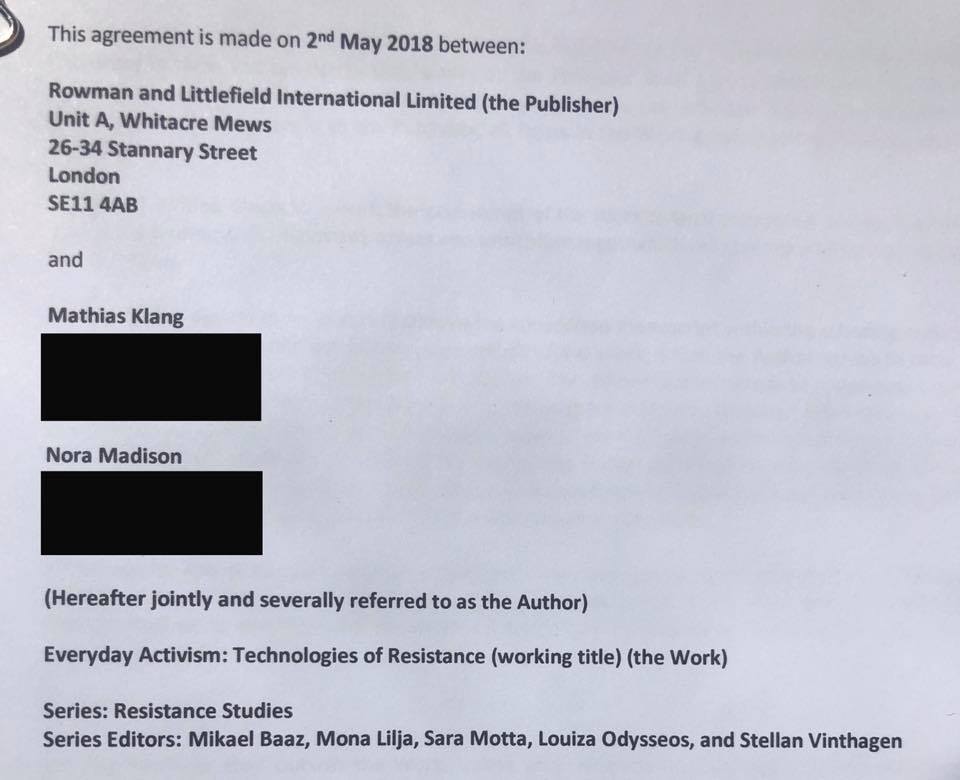
Yesterday we go the good news that the book proposal by Nora Madison and myself has been accepted by Rowman and Littlefield’s Resistance Studies series. The working title is “Everyday Activism: Technologies of Resistance” (but this will be changed later) and looks at the ways in which technology assists, mediates, and hampers acts of resistance. Tentatively the book will be published in the end of 2019. We are really excited about this project and happy to be able to focus on a long term project. 

In conjunction with this I shall be using the blog to throw out ideas/updates about the project and generally return to using the blog as a more integral writing tool.


A decade of Web 2.0

I am a big fan of the online journal First Monday so its always a thrill when I have an article published with them. This time it’s even more fun since it’s a special issue A decade of Web 2.0 — Reflections, critical perspectives, and beyond

In 2008, First Monday published a special issue entitled “Critical perspectives on Web 2.0” — bringing together a diverse group of scholars to “expose, explore and explain the ideological meanings and the social, political, and ethical implications of Web 2.0” This special issue examines many concerns that have evolved over time with the greater use and abuse of the Web and its incredible integration into global society.

The list of articles is really cool

Our article on the Domestication of Online Activism has been a long time in the writing process so I am very happy that it’s finally out!

I want to read again, slowly, carefully

It may be sad when a long time blogger decides to stop, but this is a well written reason for doing so:

…I am saturated in digital life and I want to return to the actual world again. I’m a human being before I am a writer; and a writer before I am a blogger, and although it’s been a joy and a privilege to have helped pioneer a genuinely new form of writing, I yearn for other, older forms. I want to read again, slowly, carefully. I want to absorb a difficult book and walk around in my own thoughts with it for a while. I want to have an idea and let it slowly take shape, rather than be instantly blogged. I want to write long essays that can answer more deeply and subtly the many questions that the Dish years have presented to me… Andrew Sullivan of The Dish stops blogging


Sullivan is a writer, whether he chooses to record it on paper or a blog is a choice. But this is yet another example of the technology seen as a problem. I want to read again, slowly, carefully. It reminds me of the slow reading movement (Examples here, here and here).

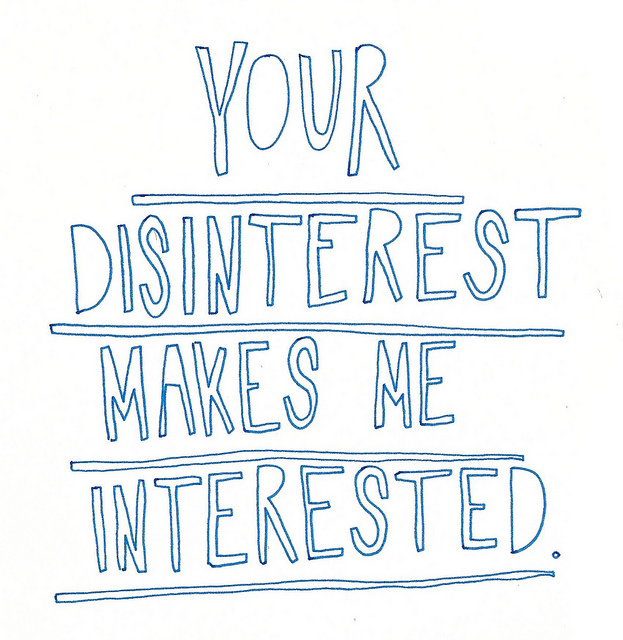
Not a disinterested mind in sight

Joshua Rothman published an article in the New Yorker: Why is Academic Writing so Academic? as this article follows on the heels of the vaguely infamous piece in the Times by Nicholas Kristof “Professors, We Need You!” I was wondering if the whole thing should be seen as an exercise in trolling. In particular when I came across the interesting sentence:

“Academic prose is, ideally, impersonal, written by one disinterested mind for other equally disinterested minds”

Disinterested? Really? Most academics can be called many things but disinterested is not one. I agree with Peter Medawar‘s (Pluto’s Republic, p. 116). description of scientists:

Scientists are people of very dissimilar temperaments doing different things in very different ways. Among scientists are collectors, classifiers and compulsive tidiers-up; many are detectives by temperament and many are explorers; some are artists and others artisans. There are poet-scientists and philosopher-scientists and even a few mystics.

It is not really possible to define scientists in any easy way. But all scientists are interested in their work, most are passionate, some are obsessive. There are famous arguments and grudge matches in academia to prove the level of intensity scientists feel toward each other. There are levels of passion for theories and objects studied that border on love.

Our published prose strives to be exact and specific but dry language should not be confused with lack of emotion – and definitely not be seen as disinterest.

Are tweets really, really public?

There is a very interesting discussion going on at Gawker about whether Twitter is private or public. Here is a representative excerpt:

Most things that you write on Twitter will be seen only by your followers. Most things that you write on Twitter will not be read by the public at large. But that is only because the public at large does not care about most things that you have to say. It is not because the public does not have “a right” to read your Twitter. Indeed, they do. They can do so simply by typing Twitter dot com slash [your name] into their web browser. There, they will find a complete list of everything that you have chosen to publish on Twitter, which is a public forum.

If you do not want your Twitter to be public, you can make it private. Then it will not be public. If you do not make it private, it will be public.

So far, so good. But then there is the bit that made me think.

Because Twitter is public, and published on the internet, it is possible that someone will quote something that you said on Twitter in a news story. This is something that you implicitly accept by publishing something on Twitter, which is public.

This part I find less convincing. Yes, Twitter is public. But does this really mean that everything in the public could be used in any way. Am I supposed to have implicitly agreed to any form of possible, potential use of my material simply because Twitter is public?

No.

From a copyright perspective there is a good case for arguing that my tweets are my property. But then again I would also argue that republishing the tweets falls under fair use or right to quote. Despite this, it’s still a good illustration that public does not mean free-to-use-in-any-way-I-want.

But what are the limits of re-use of Tweets? I would be offended if a militant group of madmen (take your pick) used a tweet of mine (along with my image and user name) on a poster (unlikely scenario, I know). But would I be able to prevent it?

What about using tweets in lectures? Ah yes, its fair use. What about shaming a student by displaying his/her tweets? (Not outlandish it happened here). What about the police shaming drunk drivers? What if a doctor retweets medical information tweeted by a patient? Would this breach medical ethics?

Tweet This by Kris Olin CC BY NC SA

The technology is public (open for all to see). But this mean that the public has the right to do whatever they please with what they see? Even if there is no legal limits to this behavior, there are ethically questionable reuses of tweets.

The point is that when I tweet something there is a small chance that the people who follow me see it. If some of them retweet then there is a chance of others seeing it. But if @stephenfry were to accidentally retweet it – I would achieve internet fame.

My tweets do not achieve internet fame. My tweets exist within a context. Naturally there is no law preventing them from leaving that context but when they do, their meaning may warp beyond their original meaning and purpose. And when this happens – what is the ethical responsibility of the re-tweeter?